Need stump grinding in Spring Hill?
Tell us about your tree and where it stands. Request a callback to check provider availability, or send a request and a local provider can follow up.
No obligationRequest a stump grinding estimate
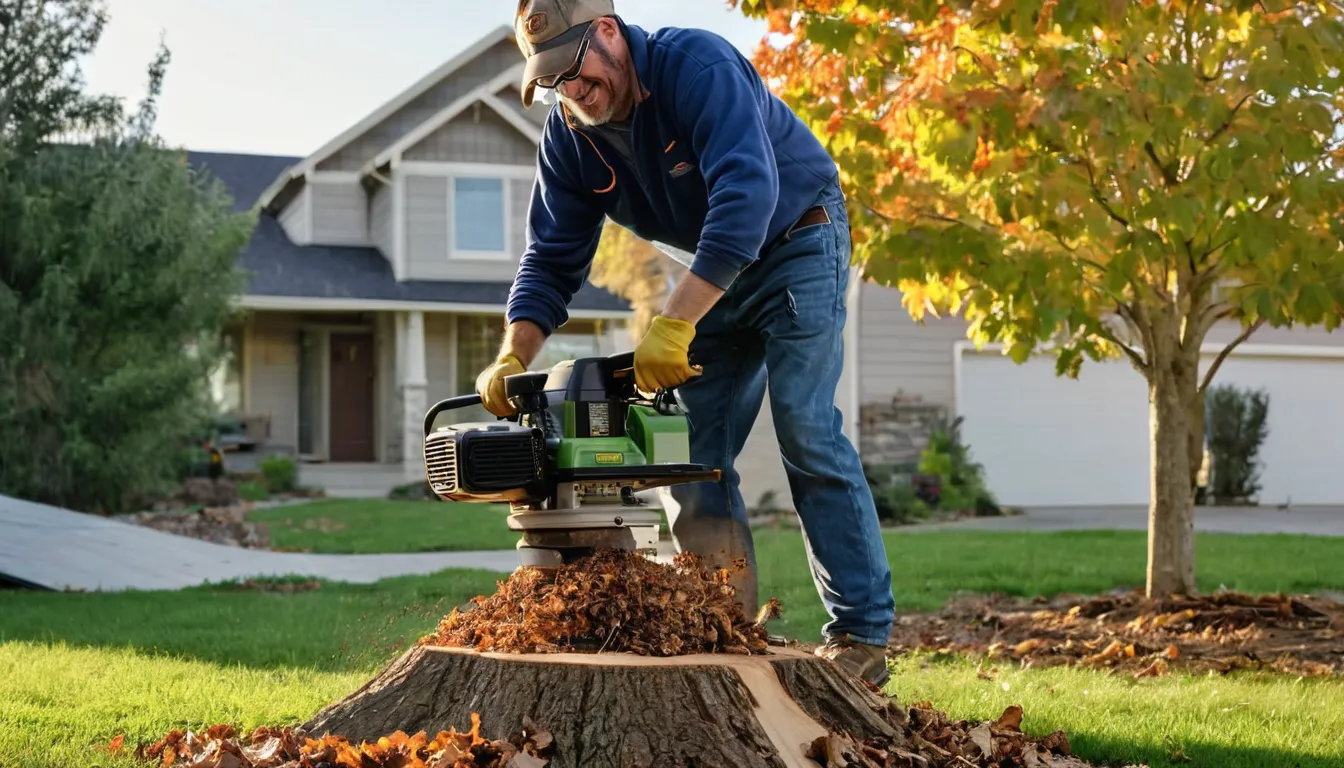
A stump is what stays behind after a tree comes down. Maybe a storm took the tree. Maybe you had it cut and never dealt with the base. Stump grinding turns that wood into chips with a machine that has a spinning cutting wheel. It leaves a flat, clean spot where you can plant grass, build a garden bed, or just mow.
Lockdig Tree Service is a referral service. We do not grind stumps. We connect you with an independent local provider in our network who does. Skip the searching and tell us about your stump. Ask the provider about depth, roots, and wood chip cleanup. Then get a written quote before the work starts.
A stump is the part of the tree that stays after the trunk is gone. It looks harmless. It often is not.
Stump grinding uses a machine with a spinning cutting wheel. The wheel chews the stump into wood chips. An independent local provider does the work. Lockdig Tree Service only connects you with that provider.
This page starts with what is urgent and ends with what can wait.
Severe spring storms and high wind can drop a tree in seconds. Hail can split one in half. After emergency tree removal or storm tree clearance, the crew often cuts the trunk and hauls it off. The stump stays behind.
A fresh storm stump can be rough. It may have sharp splinters or a jagged top. Kids and pets can get hurt on it.
If a tree falling service left a stump near a walkway, a driveway, or a play area, mark it. Tell the provider where it sits. Small problem first.
Tall grass hides a stump. People trip. Mower blades chip or bend. On a wide lot, one hidden stump can ruin a weekend of yard work.
Dead wood draws termites and carpenter ants. Many homes here are frame construction. Pests near a stump can move toward a wall. Rot also brings fungus and mushrooms.
Some stumps send up new shoots, again and again. Roots can also creep toward pipes, slabs, and basement walls. Grinding stops most sprouting. Ask the provider how deep to go.
Big temperature swings change how the ground behaves. The season can shape your plan.
The soil is wet and soft. Grinding is easy, but heavy machines can leave ruts in the lawn. Storm season also keeps providers busy, so ask early.
Dry, firm ground is easy on machines. Chips dry out fast. Hail can still bring down new trees, so do not wait for a perfect week.
Fall is calm. The ground is often dry and the weather is mild. Grind now, and you can seed or lay sod before the cold sets in.
Cold, dry winters can freeze the soil. Frozen ground can slow the work or stop it. Snow also hides stumps from view. Mark each stump before the first snow.
The provider rolls the grinder up to the stump. The wheel swings side to side. It cuts down a few inches at a time. Most jobs go about 4 to 12 inches below the ground. You are left with a pile of chips and sawdust.
The machine is loud and can throw small chips. Keep kids and pets inside while it runs.
Stump removal means digging out the whole stump and its big roots. It leaves a large hole. It takes more time and often costs more. Grinding leaves the roots in the ground to rot slowly.
Grinding fits most yards. Removal makes sense if you plan to pour a slab or set a footing. Ask the provider which one suits your plan.
Size matters most. A wide stump takes longer. Hard wood, thick roots, and rocks in the soil add time. A tight gate or a steep slope can add cost too.
Several stumps in one visit often cost less per stump than single trips. Always ask for a written quote.
An old stump can still be ground. Even one that has sat for years. Dry, hard wood can take longer to cut, so the quote may be higher.
Old stumps can hide nails, wire, or stones. Tell the provider what you know about that spot.
You will have a mound of chips. Ask if the provider hauls them away. Chips work as mulch in garden beds. Keep them off the house wall.
For a lawn, rake most of the chips out. Fill the hole with soil, then seed or lay sod. The spot may sink as wood rots below, so top it up after a few months.
You do not have to search for a stump grinding provider alone. Request a callback to check provider availability in your part of the area.
A local provider grinds the stump into wood chips below ground level.
Ask about grinding the thick roots near the surface, so mowing stays easy.
Ask if the provider hauls the chips away or leaves them for mulch.
Get the price, depth, and cleanup details in writing before any work begins.
Prices vary by job, yard, and stump. These are typical U.S. ranges only. Local rates may differ, so ask the provider for a written quote before work begins.
| Item | Typical range | Notes |
|---|---|---|
| Small stump (up to 12 in. wide) | $100 – $250 | Often a quick job; a minimum fee may apply |
| Medium stump (12–24 in.) | $200 – $450 | Hard wood can add time |
| Large stump (over 24 in.) | $400 – $800 | Wide stumps take longer and use more machine time |
| Several stumps in one visit | $300 – $1,000 | Often cost less per stump than separate visits |
| Tight access or steep slope | $50 – $300 extra | Small machine or extra labor may be needed |
| Full stump removal (dig out) | $350 – $1,200 | Leaves a larger hole to fill |
Share the stump size, where it sits, and if a storm left it behind.
We connect you with an independent local provider in our network.
Ask about depth, roots, and chips, and get the price in writing.
Pick a time that fits the season and the weather in Spring Hill.
Tell Lockdig Tree Service about your stump. We connect you with an independent local provider in our network.
Providers know the soil, storms, and seasons in the Spring Hill area.
Request an estimate and compare. You decide whether to book the work.
Get clear details on depth, roots, and cleanup before any work starts.
Tell us about your tree and where it stands. Request a callback to check provider availability, or send a request and a local provider can follow up.
No obligationTell us about your tree and where it stands. Request a callback to check provider availability, or send a request and a local provider can follow up.
No obligation